
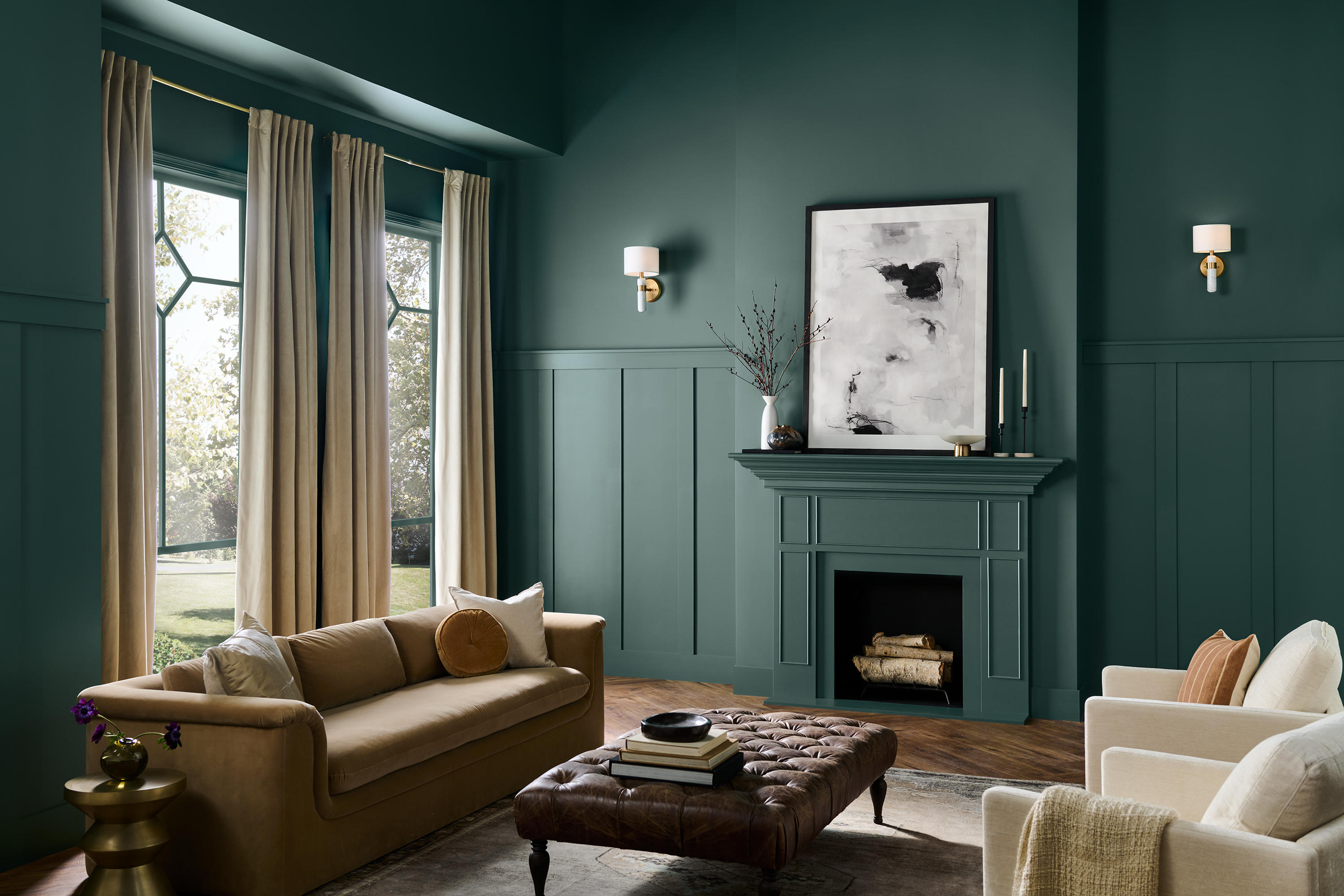
A living room rarely serves just one purpose. It can be a place to gather, recharge, entertain, read, watch a favourite movie or simply enjoy the changing light throughout the day. The right living room paint colour can help bring all of those moments together while giving the space a distinct mood and personality.
Beyond setting the mood, paint can help define the room itself. It can highlight architectural details, frame a view, give artwork greater presence or help an open living space feel more intentional.
The best paint colours for living rooms depend on the atmosphere you want to create. Light whites and soft neutrals can make a room feel bright and airy; warm beige, brown and earth tones can add comfort; blues and greens can create a calm, restorative feeling; and deeper, saturated hues can bring richness, intimacy and definition.
Whether your style leans classic, contemporary, modern organic, eclectic or somewhere in between, explore these living room paint colour ideas across every major colour family to find a shade that feels right for your home.
How to Choose the Right Living Room Paint Colour
When choosing a living room paint colour, start with the elements that are least likely to change—flooring, fireplaces, built-ins, large furniture pieces and architectural details. These fixed features can provide important clues about which colours and undertones will work best.
Next, think about how you want your living room to feel. Lighter colours can create an open, airy atmosphere, while warm neutrals, browns and earthy hues often make a space feel comfortable and inviting. Blues and greens can introduce a calmer, nature-inspired mood, while deeper saturated shades can create intimacy, drama and definition.
Also consider how the living room connects to adjoining spaces. In an open-concept home, a versatile wall colour can create visual continuity, while a deeper or contrasting shade can help define the living area within a larger floor plan.
Most importantly, sample paint colours in the room itself. Natural and artificial light can change how a colour looks throughout the day. BEHR® paint coluors are available through Samplize peel-and-stick samples, making it easy to move colours from wall to wall and see how they interact with your lighting, furnishings and finishes. Compare your samples in morning, afternoon and evening light before making your final choice.
How Does Lighting Affect Living Room Paint Colours?
Lighting can dramatically influence how a paint colour appears. A shade may look warmer in afternoon sunlight, cooler in indirect light or deeper after sunset under artificial lighting.
Living rooms with abundant natural light can often support deeper or more saturated colours, while rooms with limited daylight may benefit from lighter or warmer hues that help create a brighter, more inviting feel.
Pay attention to the direction your windows face, the amount of daylight the room receives and the temperature of your light bulbs. Rather than choosing a colour based only on a screen or paint chip, test it in the space and observe how it changes throughout the day.
What Are the Best Paint Colours for a Living Room?
There is no single best colour for every living room. The right choice depends on the room’s natural light, furnishings, architecture and the mood you want to create.
For a bright and airy living room, consider whites, creams, pale neutrals or soft blues. For a warm and welcoming space, explore beige, tan, brown, clay and muted yellow. Greens and blues can make a room feel calm and restorative, while burgundy, plum, charcoal, deep green and navy can create a cozier, more dramatic atmosphere.
The key is finding a colour that complements the elements already in your room while supporting how you want the space to feel.
Red Living Room Paint Colours
Red can bring energy, warmth and personality to a living room, particularly when the hue has earthy or muted undertones.
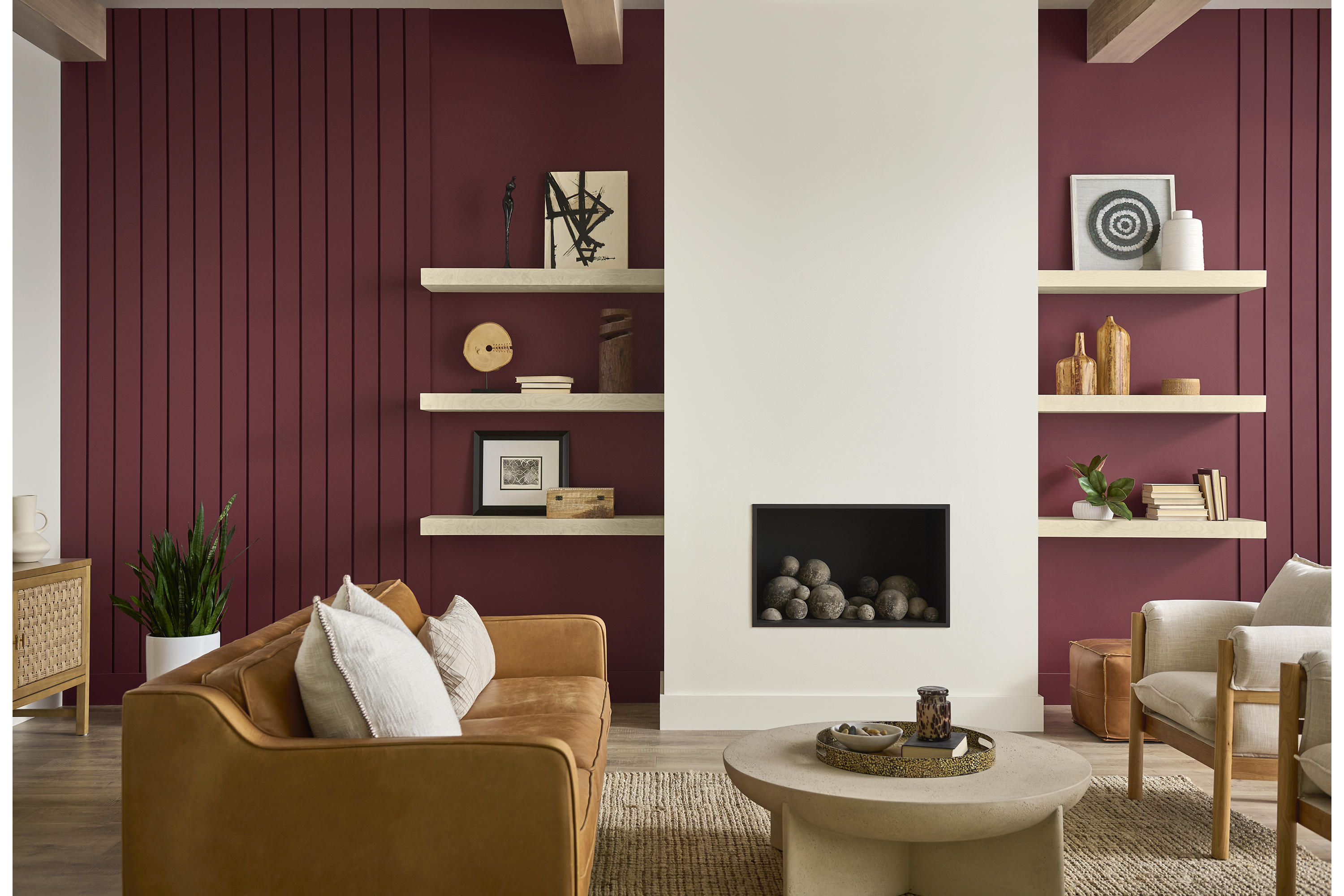
Maroon, burgundy, Bordeaux and oxblood shades feel grounded and inviting rather than overly bright. Use them across all four walls for an immersive, cocooning effect, or introduce them on a fireplace wall, built-in shelving or another architectural feature.
Pair deep red paint colours with warm neutrals, dark woods and tactile materials for a collected, lived-in look.
Pink Living Room Paint Colours
Today’s pink paint colours extend far beyond pastel.
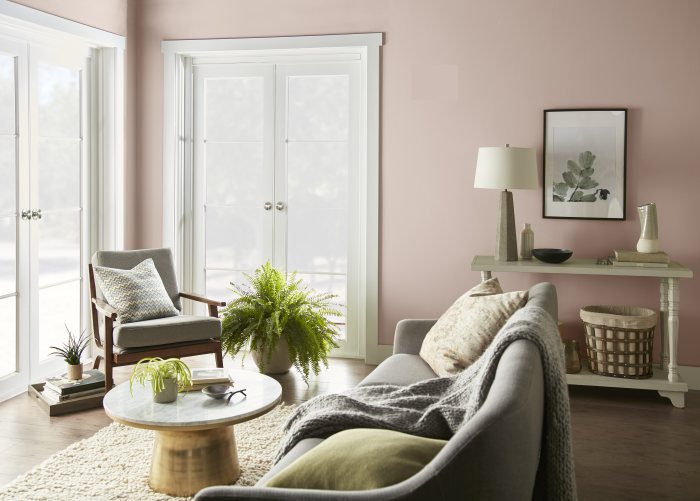
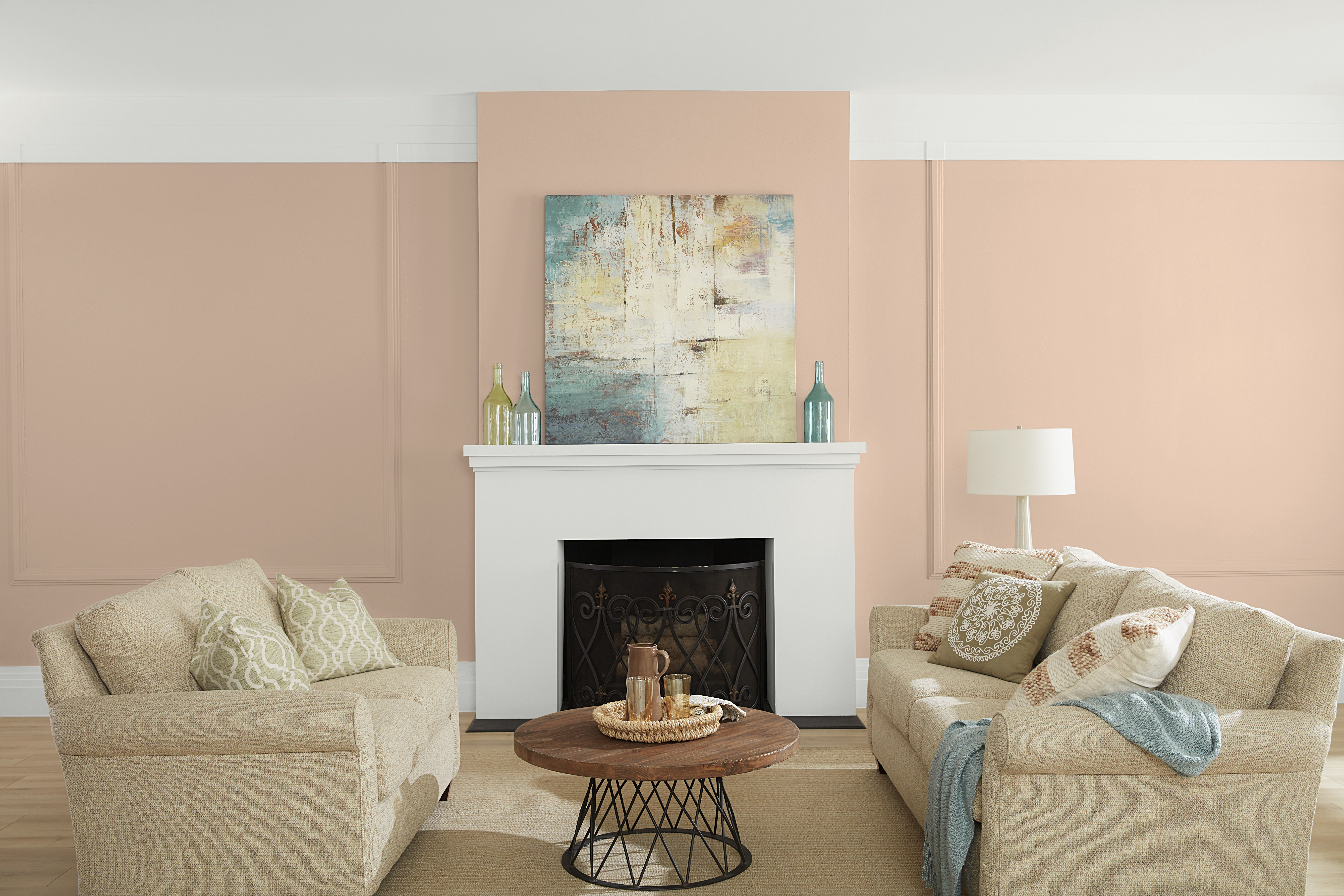
Dusty rose, blush, clay pink and muted terracotta-inspired shades bring warmth to a living room while still behaving much like a neutral. Their earthy undertones make them especially easy to pair with cream, brown, green, burgundy and natural wood.
A softer pink can brighten a living room without the starkness of white, while a deeper, browned pink adds warmth, depth and character.
Orange Paint Colours for Living Rooms
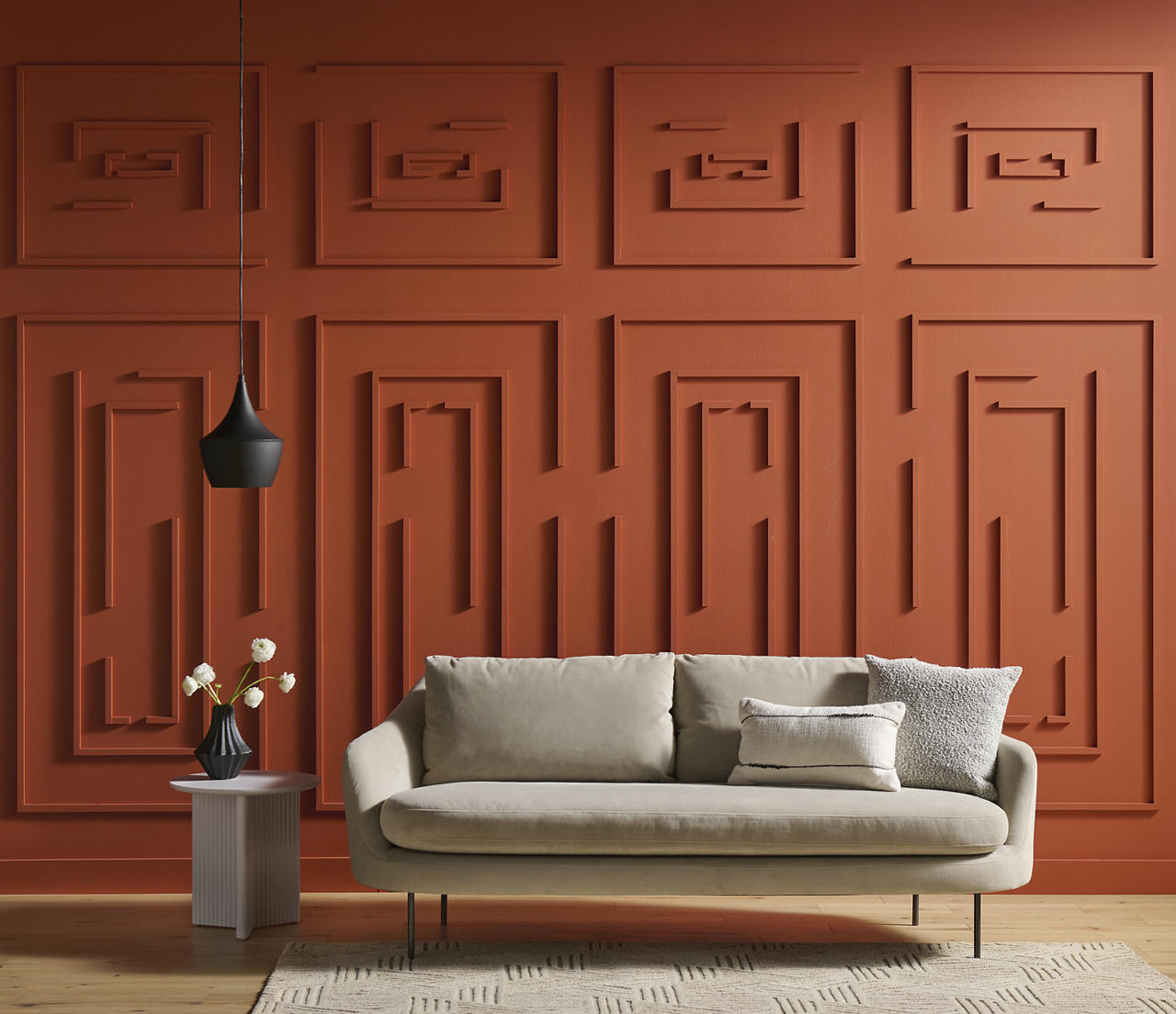
Orange paint colours can range from subtle and earthy to energetic and expressive.
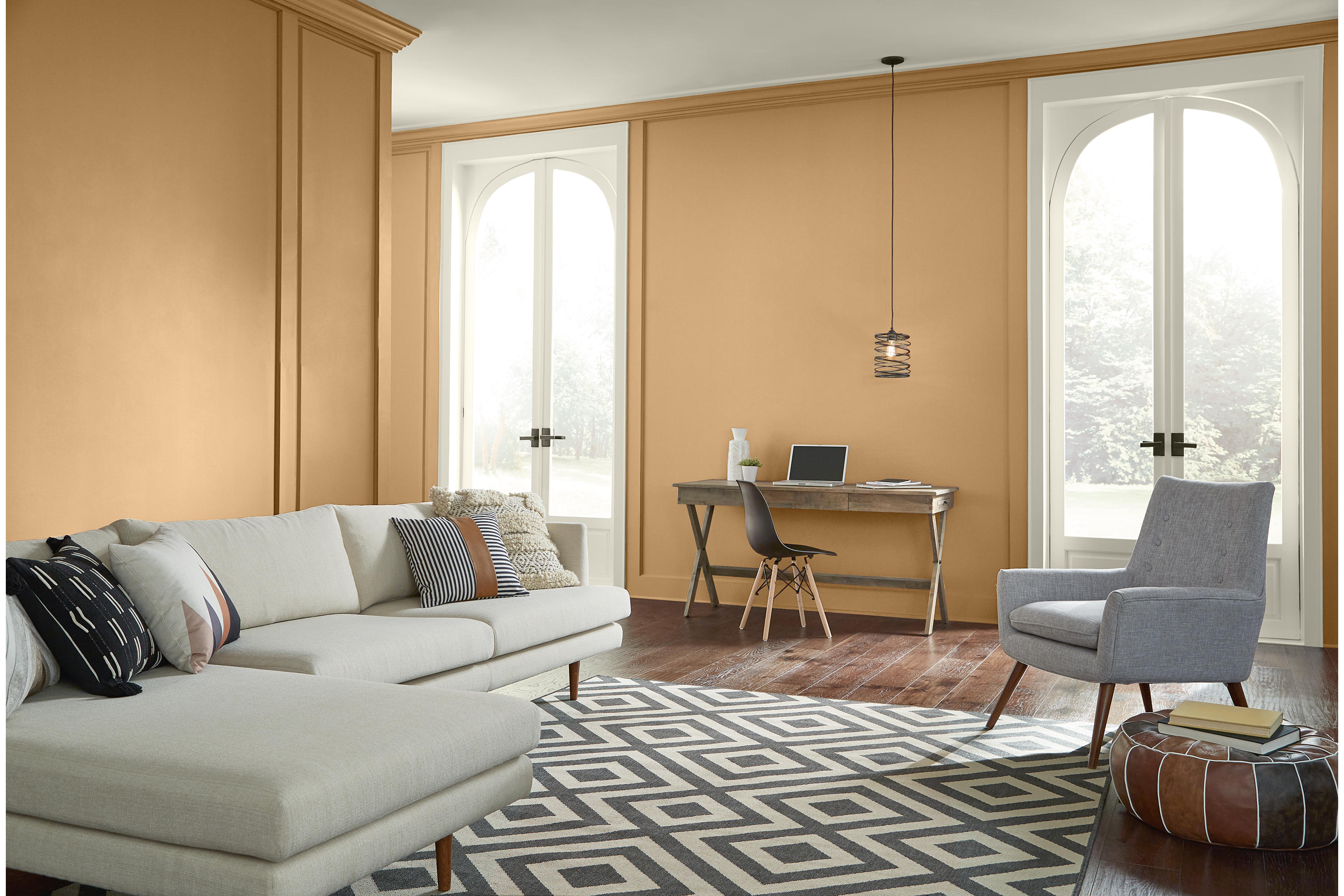
Soft apricot and sun-baked clay bring warmth without overwhelming a space, while rust and burnt orange create greater depth and richness. These shades work particularly well in mid-century, eclectic and globally inspired living rooms.
Balance orange with cream, beige and brown for a harmonious colour scheme.
\
Yellow and Gold Living Room Paint Colours
Yellow brings warmth and optimism to a living room, but it does not need to be bright or highly saturated.
Soft buttercream, straw, ochre and muted gold shades can create a warm glow that shifts beautifully throughout the day. They pair naturally with warm woods, cream upholstery and earthy green or brown accents.

Soft yellow paint colours can help a living room feel brighter, warmer and more open, making them a great choice for creating an airy, welcoming atmosphere.
Green Paint Colours for Living Rooms
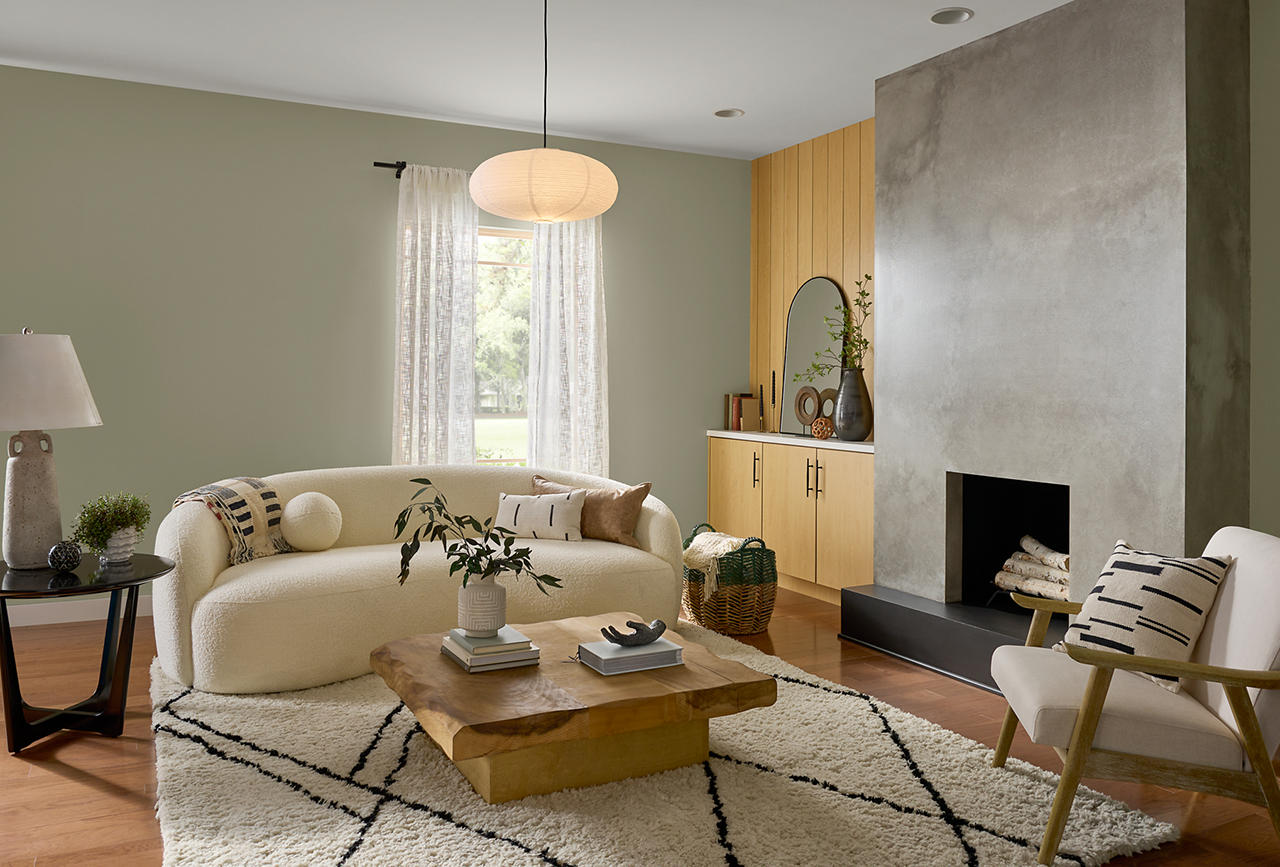
Green is one of the most versatile living room paint colours because of its strong connection to the natural world.
Soft sage and grey-green shades can create a relaxed backdrop, while olive, mossy and browned greens offer more depth and character. Deep forest-inspired greens can transform a living room into an enveloping, restorative retreat.
Green also works particularly well with materials commonly found in living spaces, including wood, stone, leather, linen and warm metals, making it easy to create a layered, natural look.
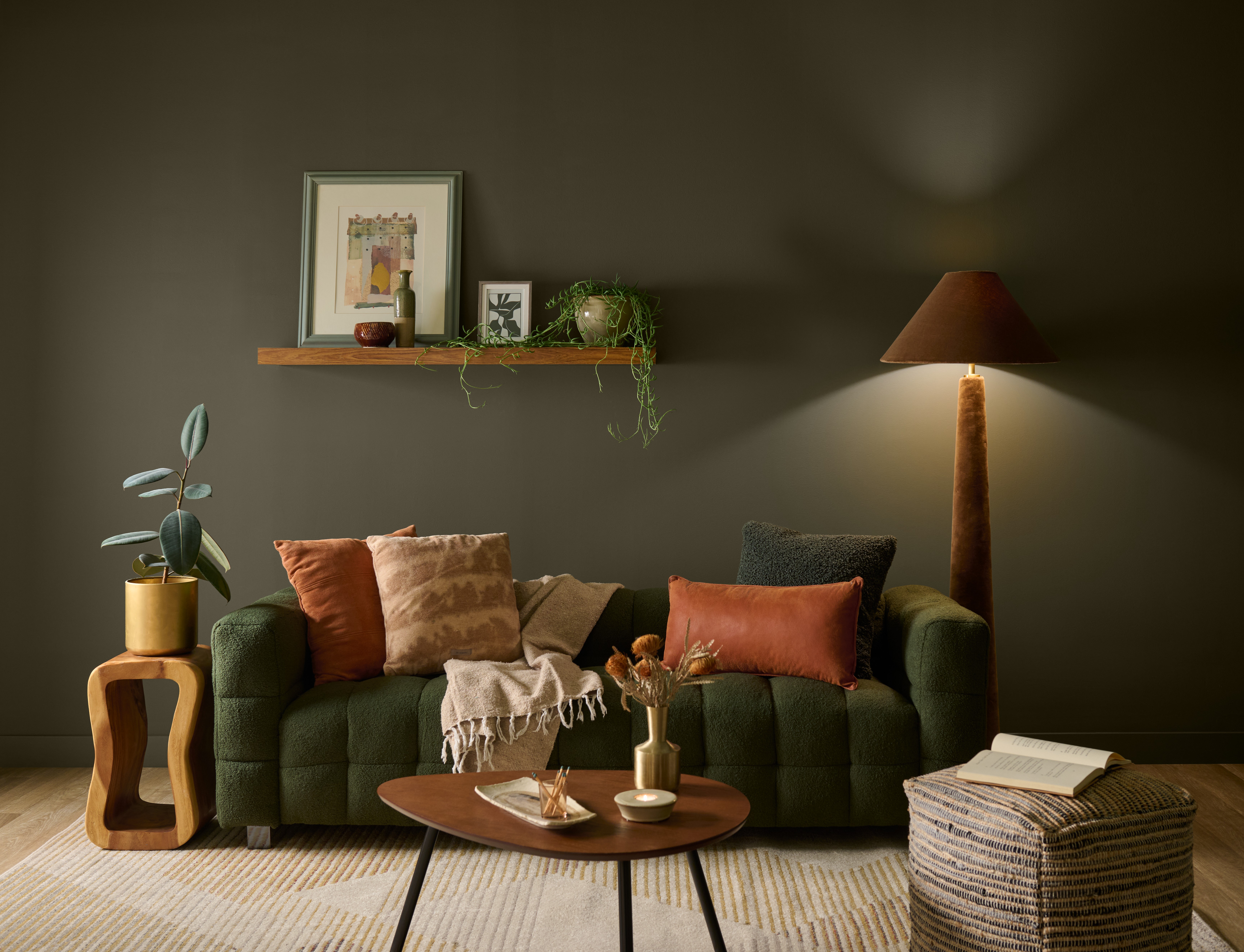
Whether used as a soft backdrop or an immersive all-over colour, green living room paint colours can bring a grounded, restorative quality to a space while pairing naturally with a wide range of colours and materials.
Blue-Green Paint Colours for Living Rooms
Blue-green paint colours bring together the calming qualities of blue with the natural freshness of green, making them an inviting choice for living rooms. These versatile hues can create a space that feels relaxed, refreshing and connected to nature, while still adding enough colour to give the room personality.
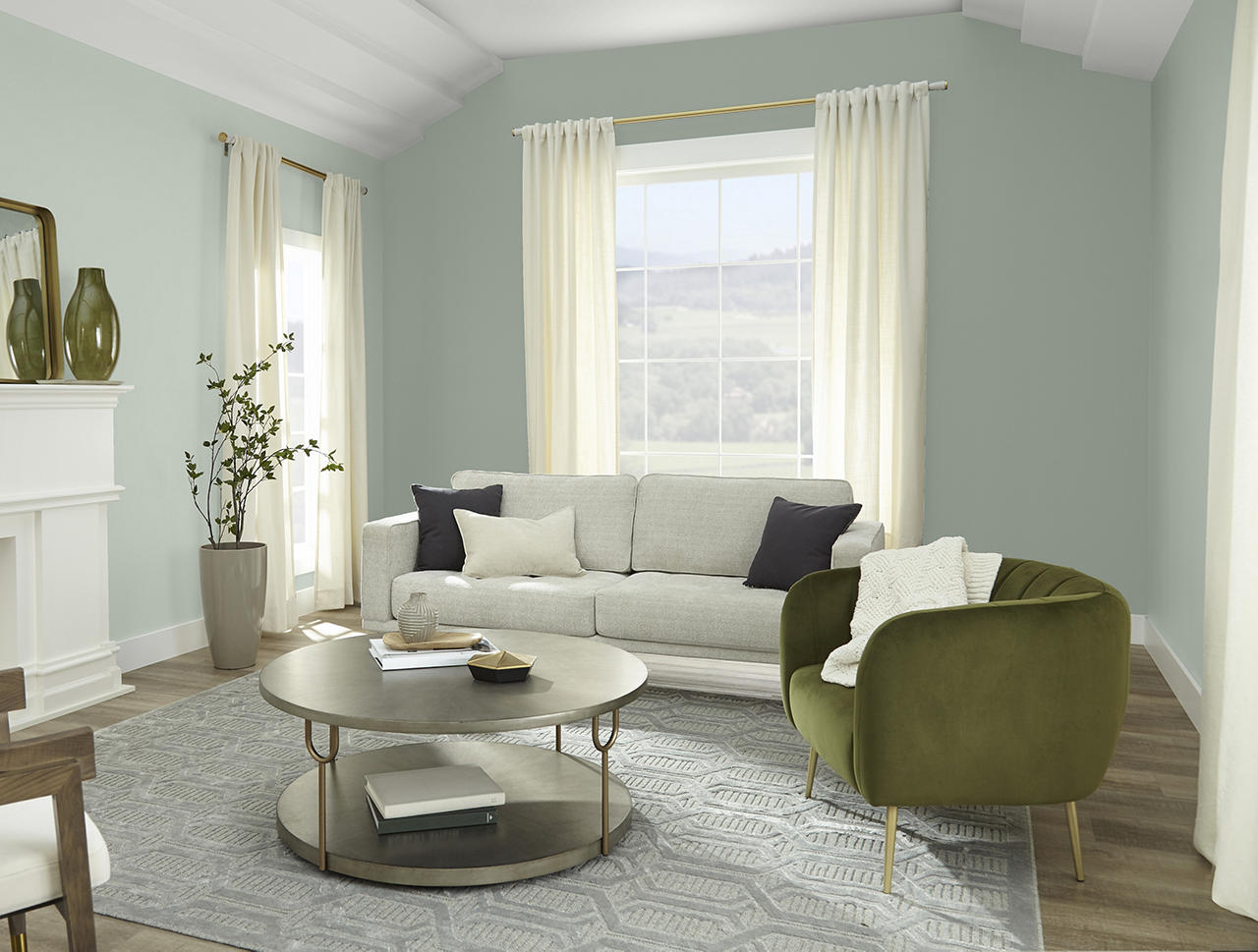
A blue-green living room creates a calm, refreshing atmosphere with just the right amount of colour. Crisp white trim and light furnishings brighten the palette and provide clean contrast, allowing the blue-green walls to feel fresh, airy and inviting.
Blue Paint Colours for Living Rooms
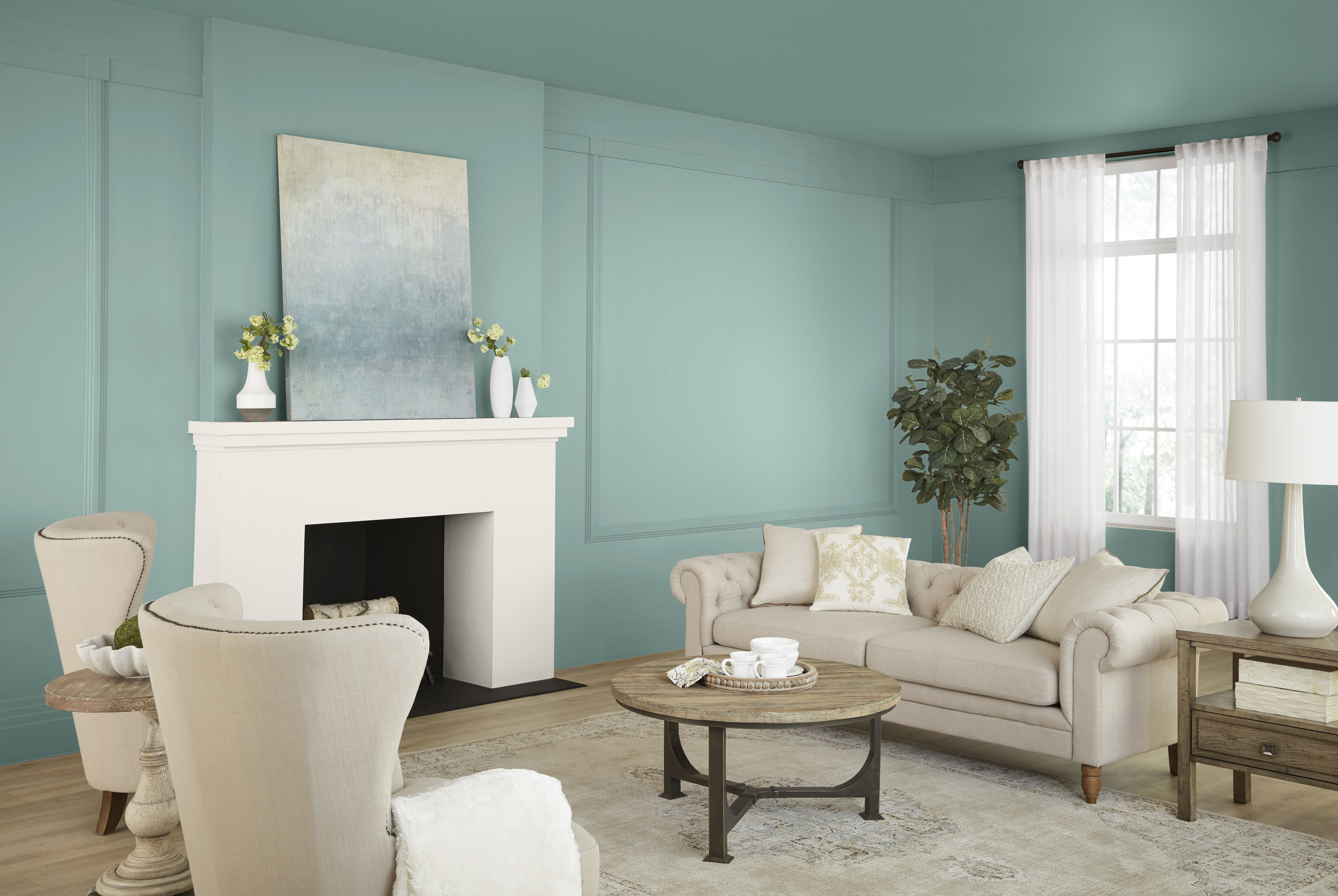
Blue can take on an entirely different character depending on its depth and undertone.
Pale, atmospheric blues can make a living room feel light and refreshing, while blue-greys introduce a quieter, more sophisticated mood. Mid-tone denim and mineral blues bring more presence without overwhelming a space, while navy and inky blues can add dramatic depth.
Blue living room paint colours pair naturally with warm whites, beige, camel and wood tones. The contrast between cool colour and warm materials can make a space feel both relaxed and layered.
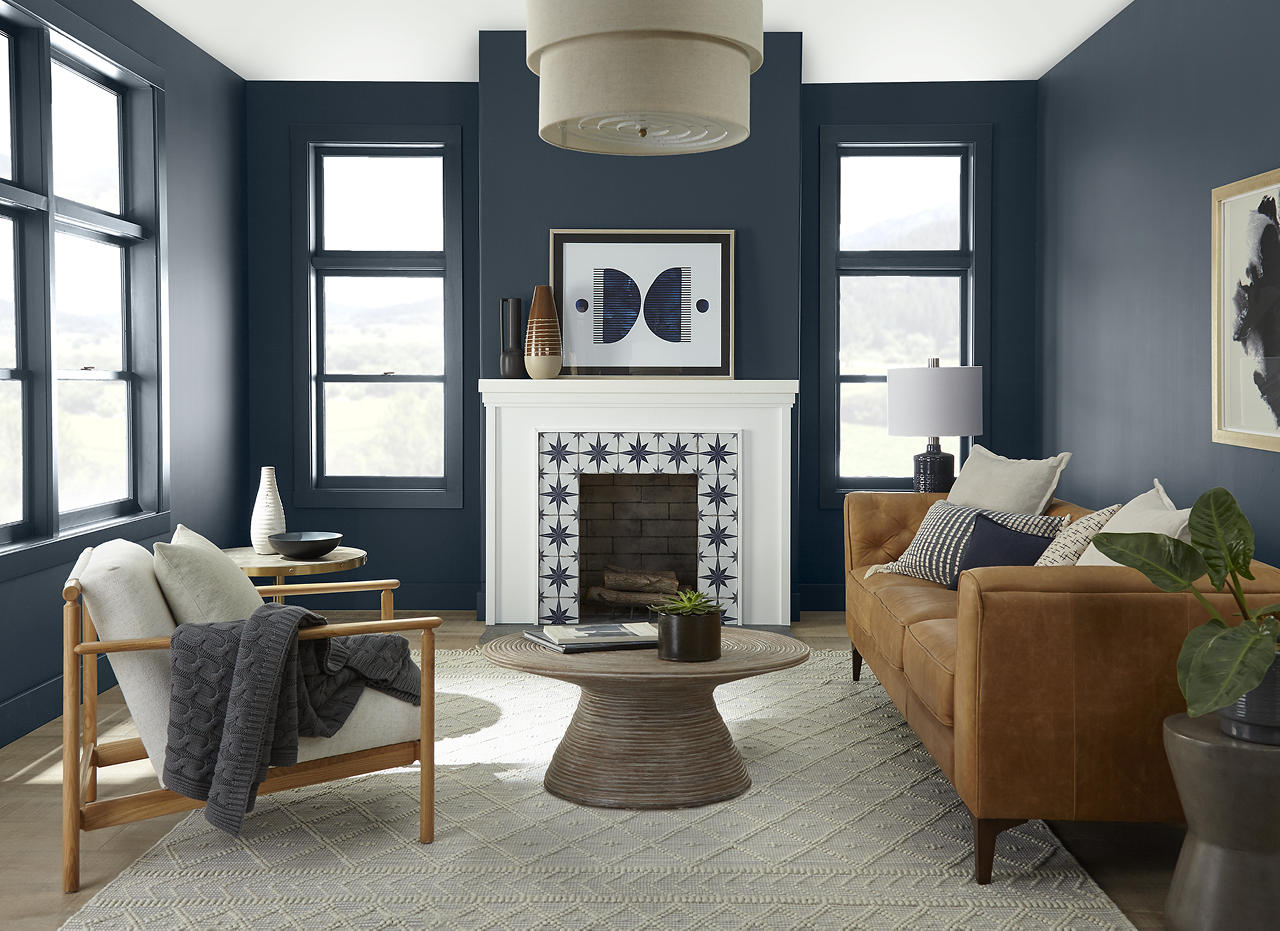
If you are looking for a relaxing living room paint colour, blue is an especially versatile choice because it can shift from fresh and airy to sophisticated and enveloping depending on the shade.
Purple and Plum Living Room Paint Colours
Purple can be surprisingly versatile when softened, muted or deepened.
Muted mauve, dusty violet and grey-purple shades introduce subtle colour without feeling overly sweet, while plum and eggplant tones can create a richer, more intimate effect.

Pair a deeper purple paint colour with layered neutrals, warm browns and metallic finishes. For a more contemporary palette, combine muted blue with taupe or earthy green.
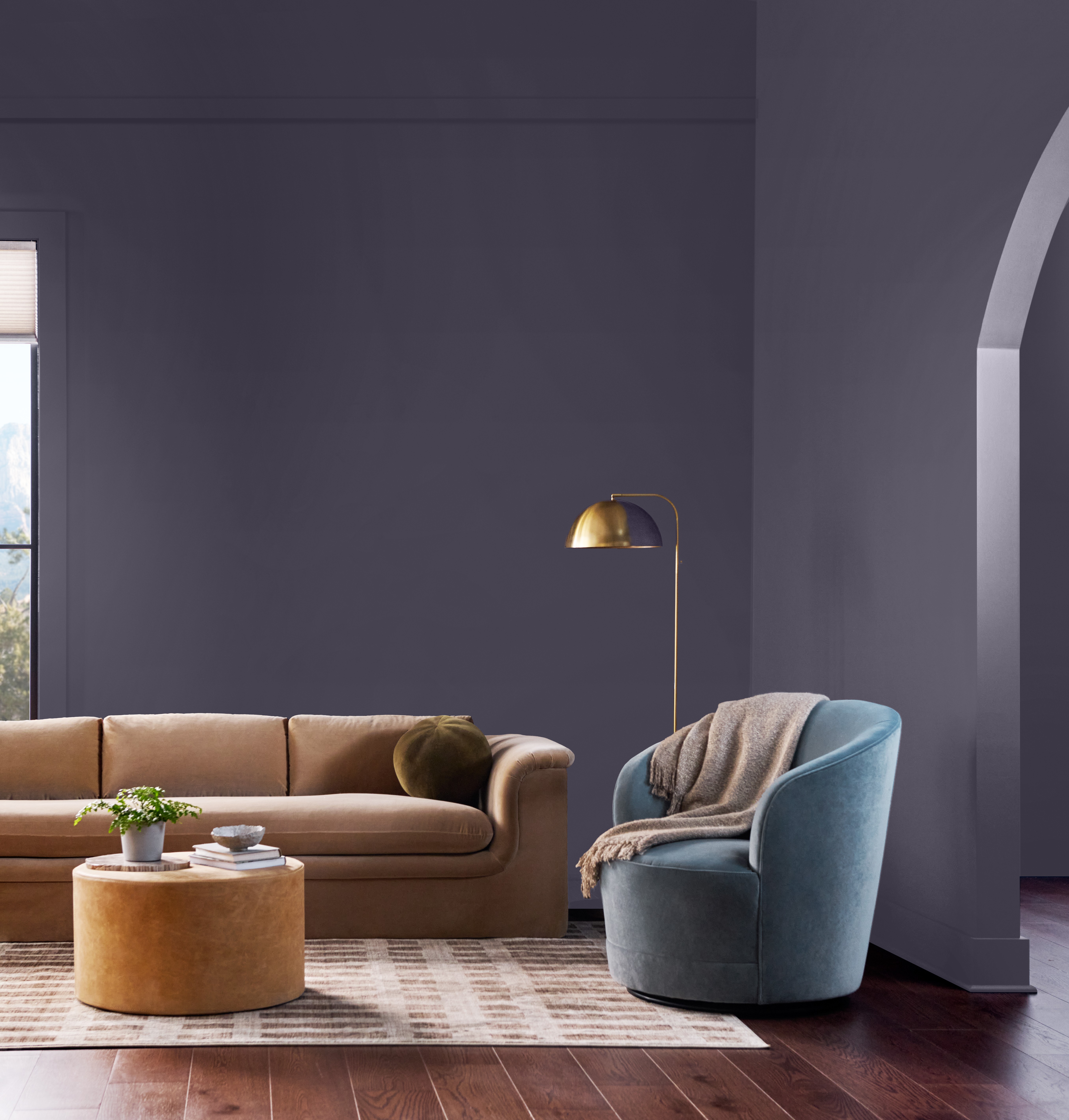
White Paint Colours for Living Rooms
White living room paint colours create a fresh, flexible foundation and can help a space feel open and airy—but not all whites feel the same.
Warm whites with creamy, beige or subtle yellow undertones can soften a living room and pair naturally with wood, woven materials and warm-toned furnishings. Cleaner or cooler whites create a crisp backdrop for contemporary spaces, colourful artwork and stronger graphic contrast.
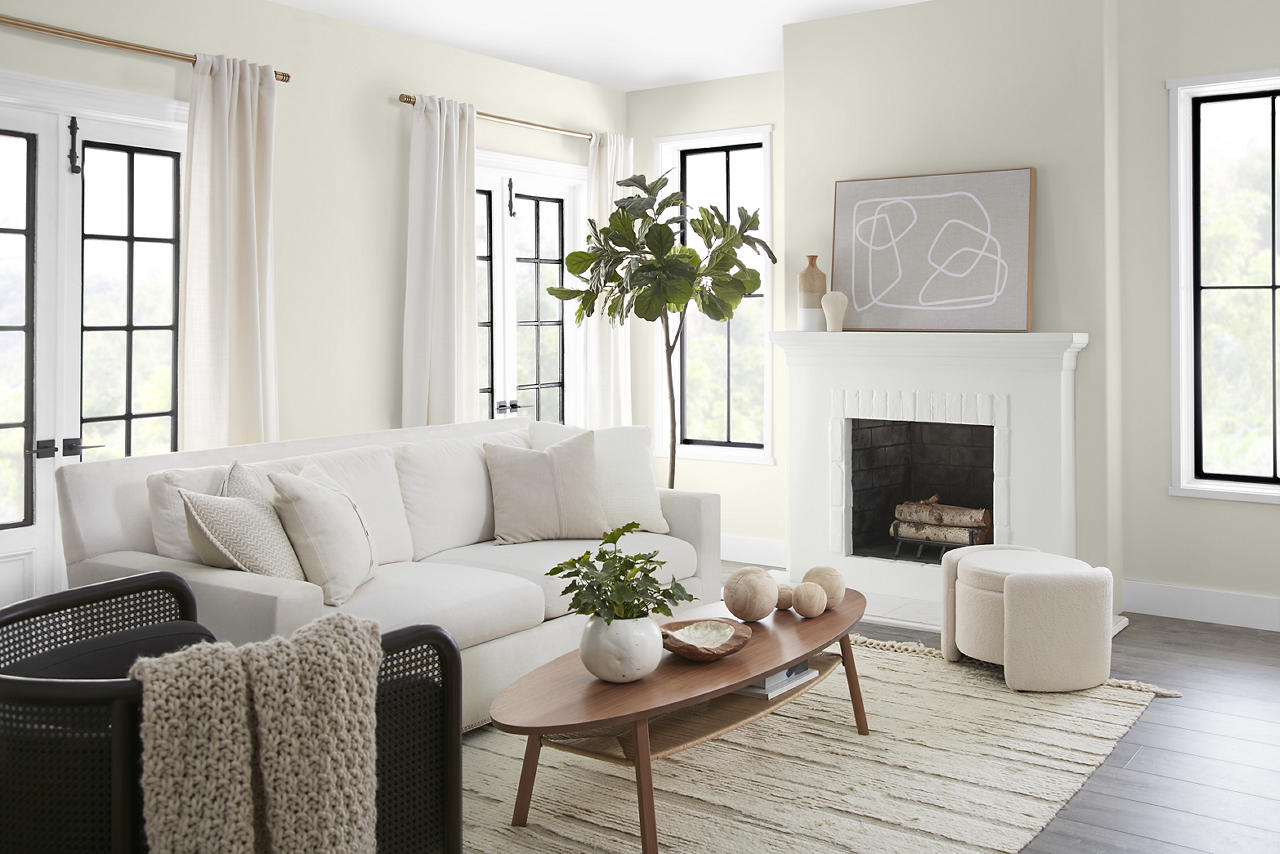
For added dimension, try layering several variations of white rather than relying on a single shade. Walls, trim, ceilings and architectural details can each take on a slightly different white for a subtle tonal effect.
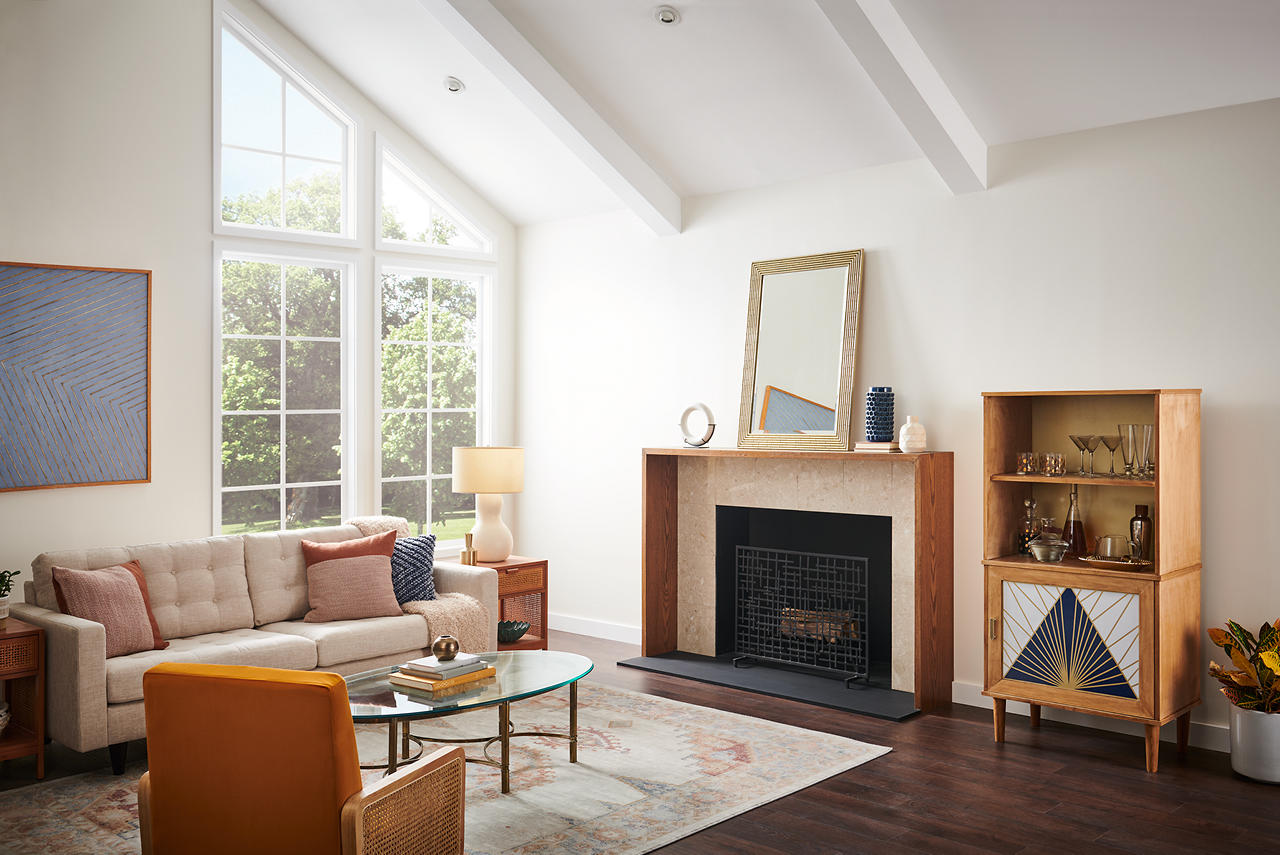
Beige, Cream and Tan Living Room Paint Colours
Beige, cream and tan living room paint colours offer the versatility of a neutral while bringing more warmth than a crisp white or cool grey.
These warm neutrals work especially well with natural materials such as oak, walnut, stone, linen and leather. Their understated warmth also makes them a versatile choice for open-concept homes, where one colour may need to connect several adjoining spaces.
For a more modern approach, pair beige, cream or tan walls with deeper brown, green or black accents to create definition without losing the room’s relaxed quality.
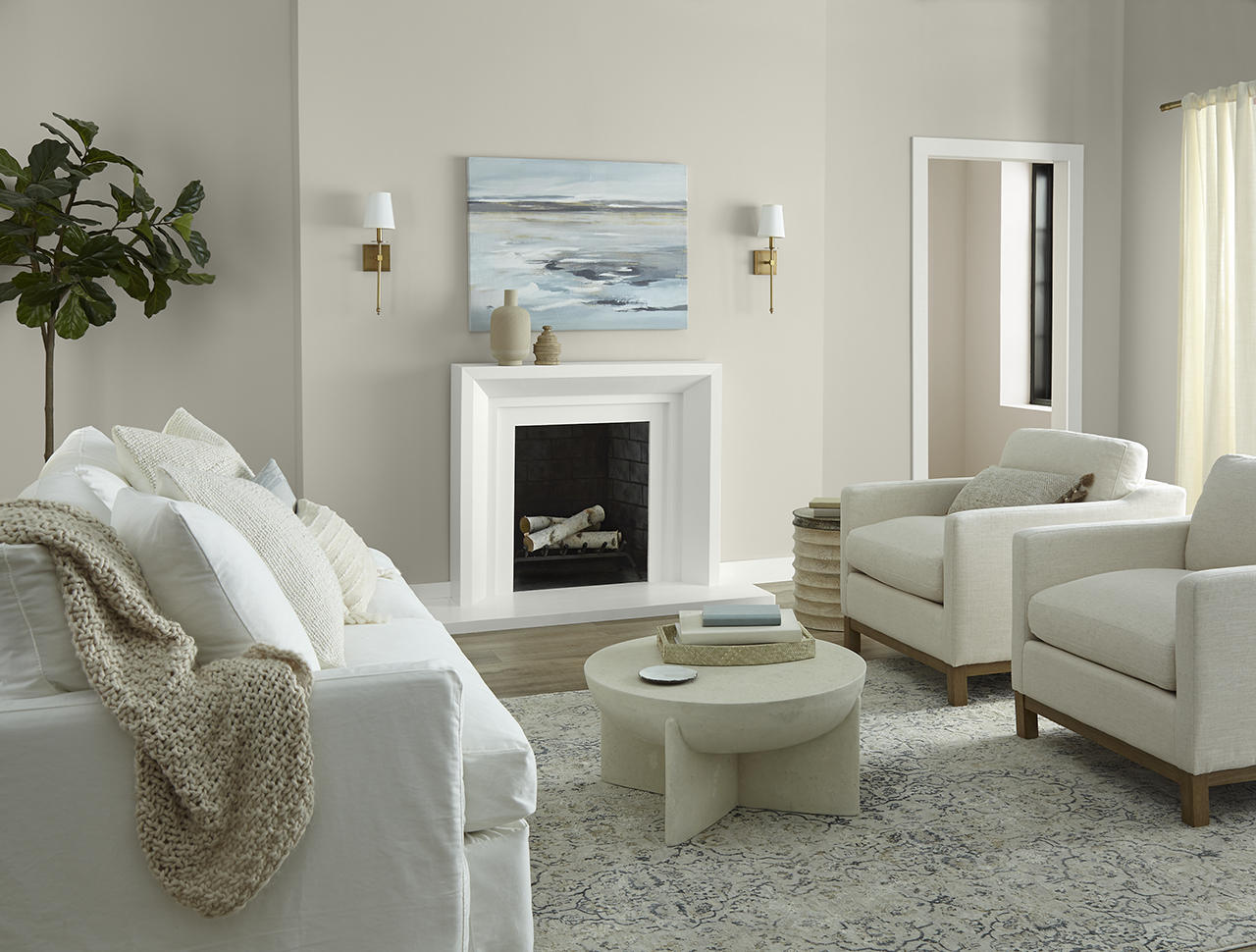
Greige and Taupe Living Room Paint Colours
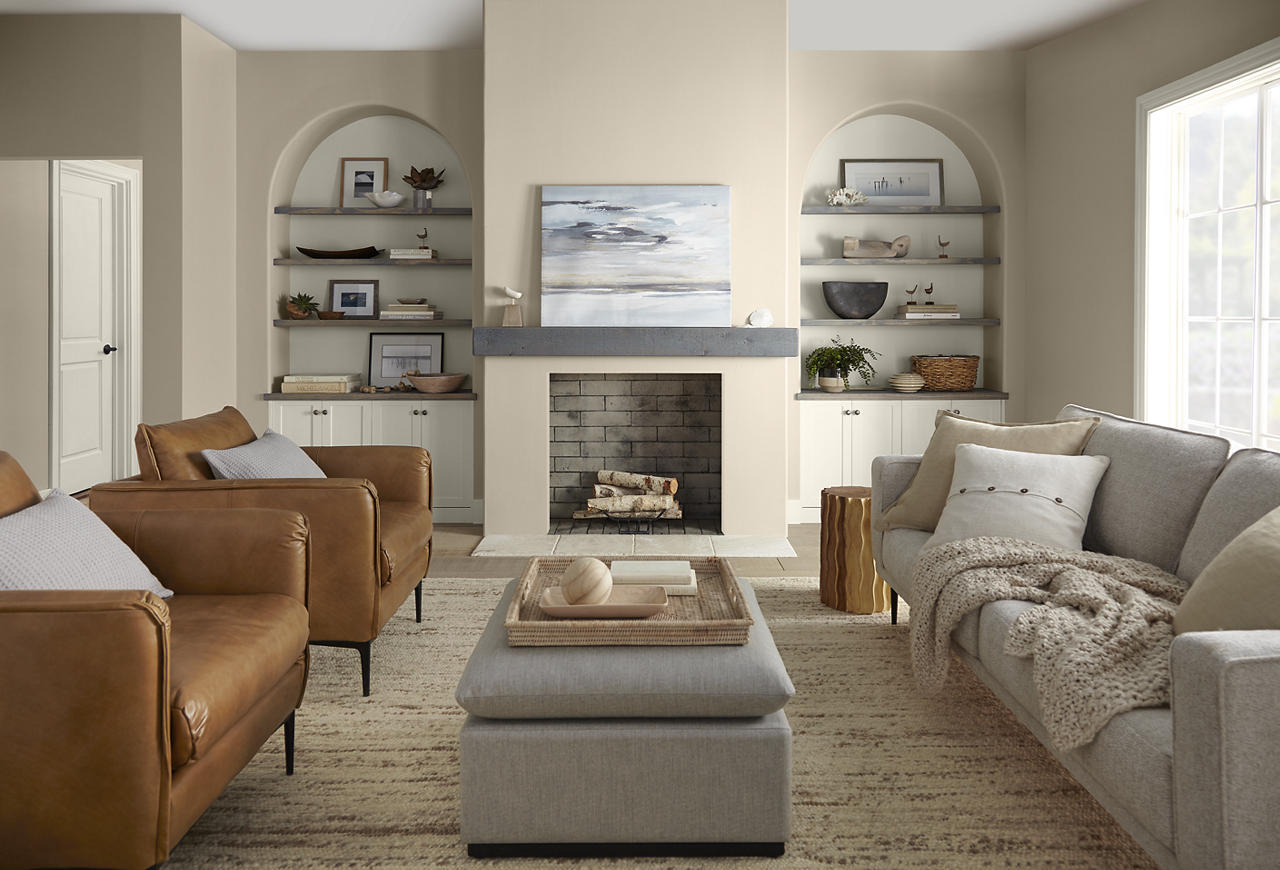
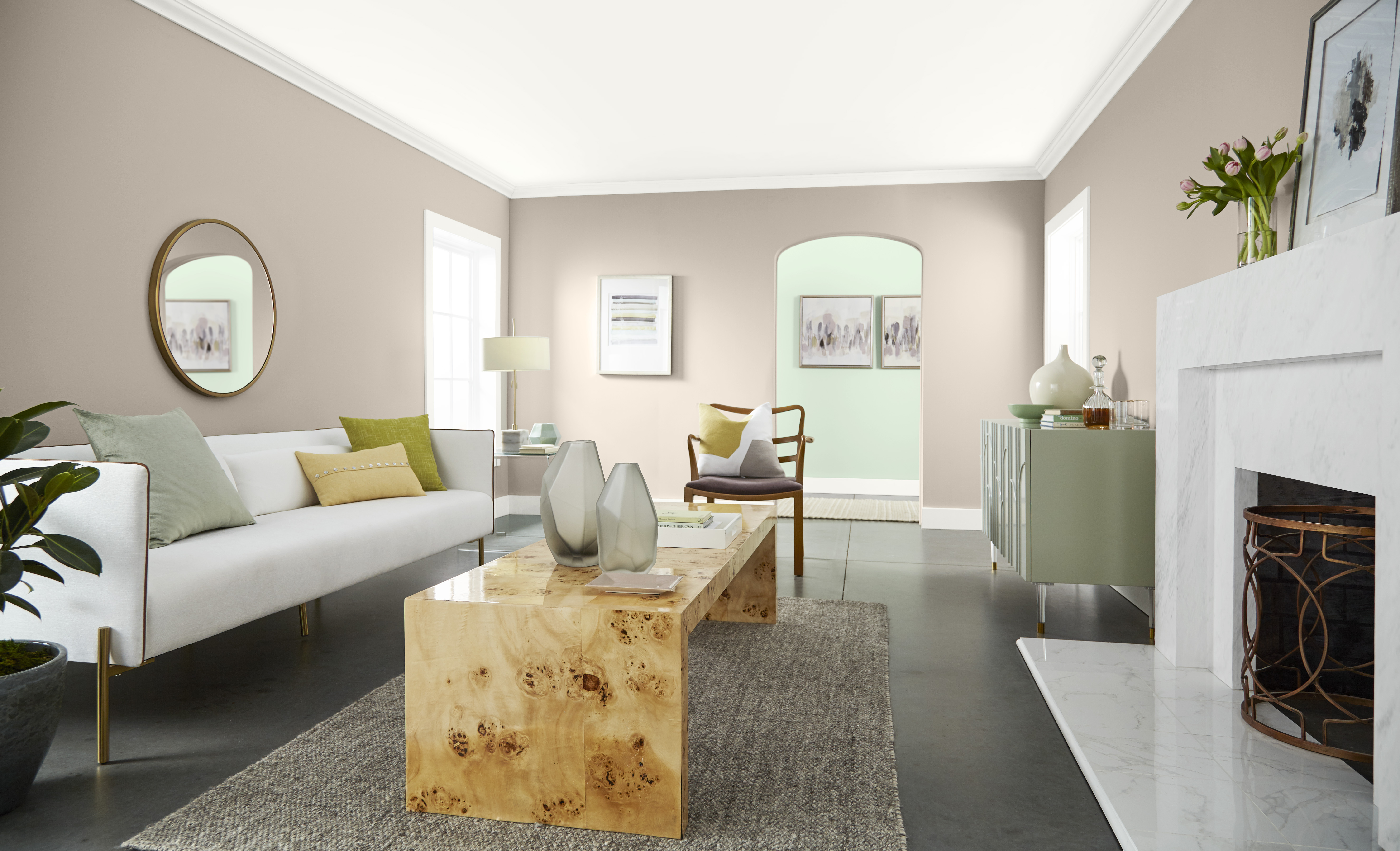
Somewhere between warm beige and cool grey are greige and taupe—complex neutrals that can shift subtly depending on light and surrounding materials.
Greige offers the softness of beige with the tailored quality of grey, while taupe may introduce brown, mushroom or violet undertones that give a room added depth.
These nuanced neutrals are especially useful when a living room contains a mix of warm and cool finishes because they can help bridge wood tones, stone, metals and upholstered pieces into one cohesive palette.
That versatility makes greige and taupe especially useful when choosing a living room wall colour that needs to work with existing furniture, flooring and finishes.
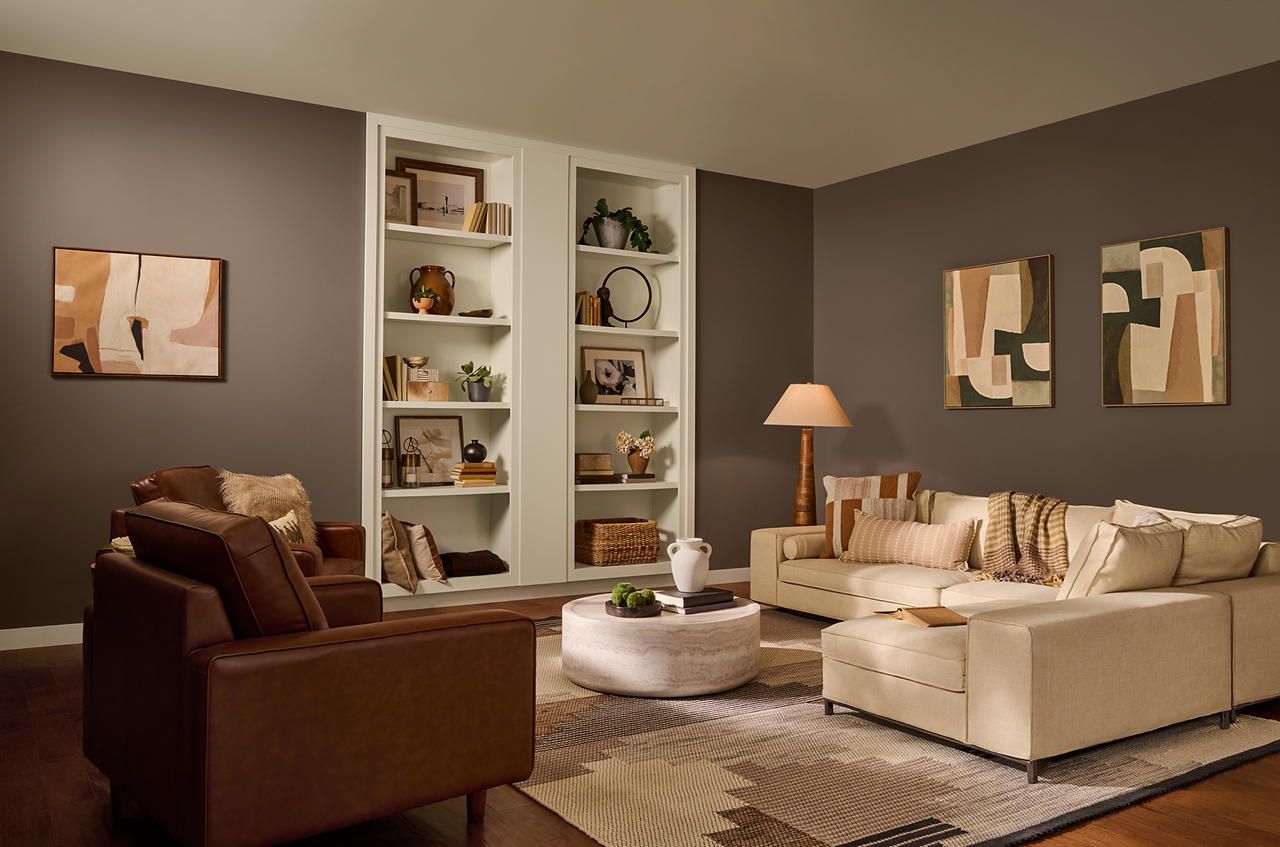
Brown Living Room Paint Colours
Brown living room paint colours are returning in richer, more dimensional ways. Rather than basic brown, think cocoa, clay-brown, mushroom, umber and deep espresso.
These colours have an inherently grounding quality and can make larger living rooms feel warmer and more intimate. Brown also connects beautifully with wood, stone, metallic finishes and other nature-inspired materials.
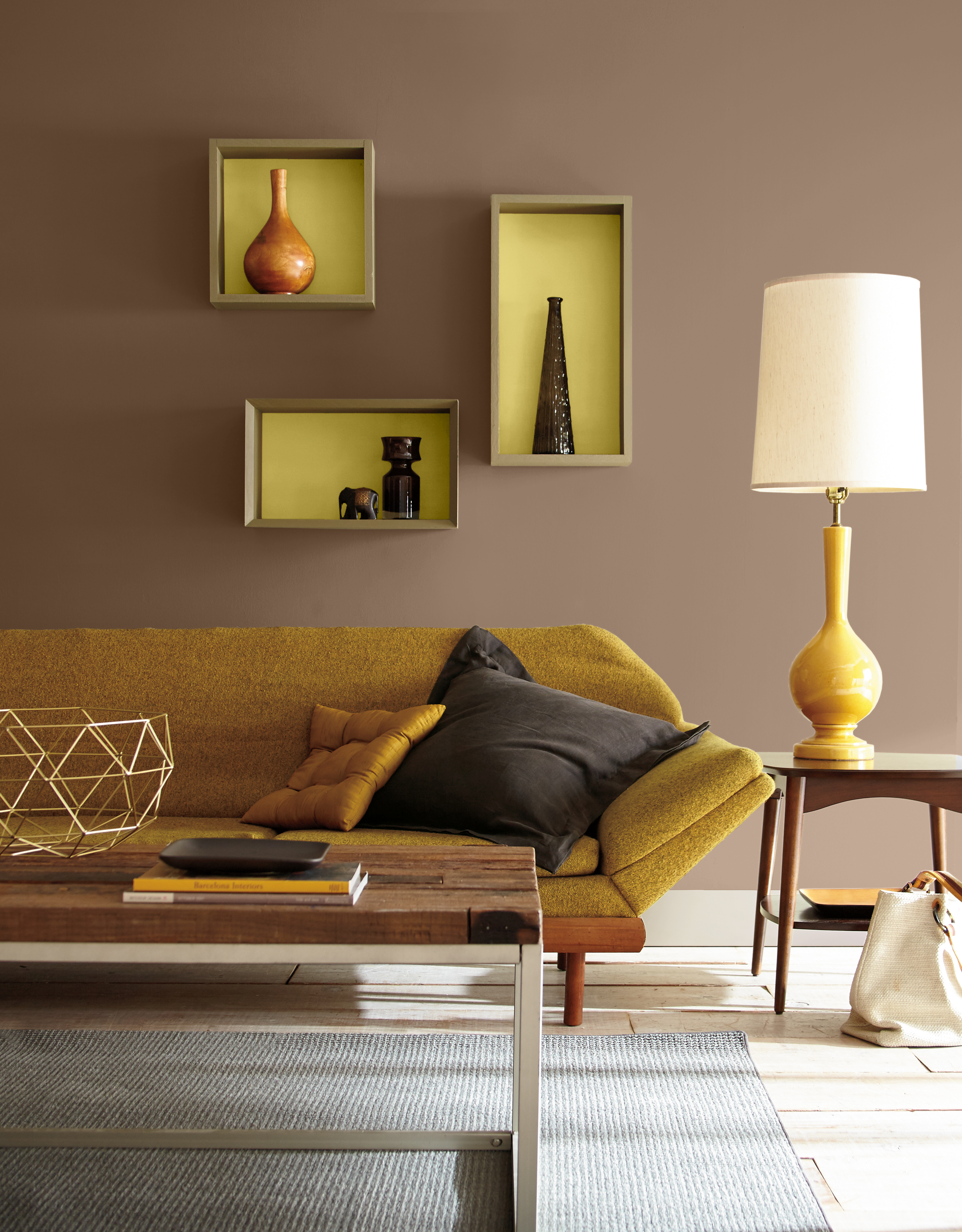
For a tonal living room, layer brown walls with camel, cognac, cream and lighter natural textures. For more contrast, introduce soft blue, muted green or warm white.
Grey & Black Paint Colours for Living Rooms
Grey remains a versatile living room paint colour when its undertone is chosen intentionally.
Warm greys can feel soft and sophisticated alongside natural wood and creamy upholstery, while cooler blue- or green-based greys create an airy, more contemporary effect.
Instead of automatically reaching for a mid-tone grey, consider the mood you want to create. Pale grey can provide a quiet backdrop, while charcoal adds depth and can make artwork, furniture and architectural details stand out.
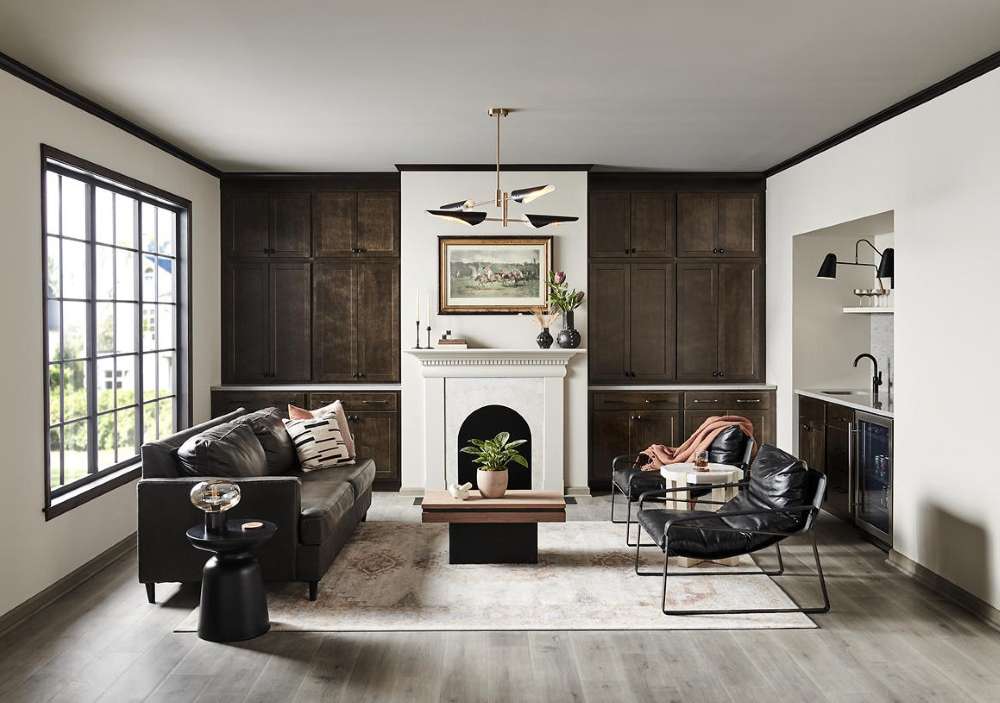
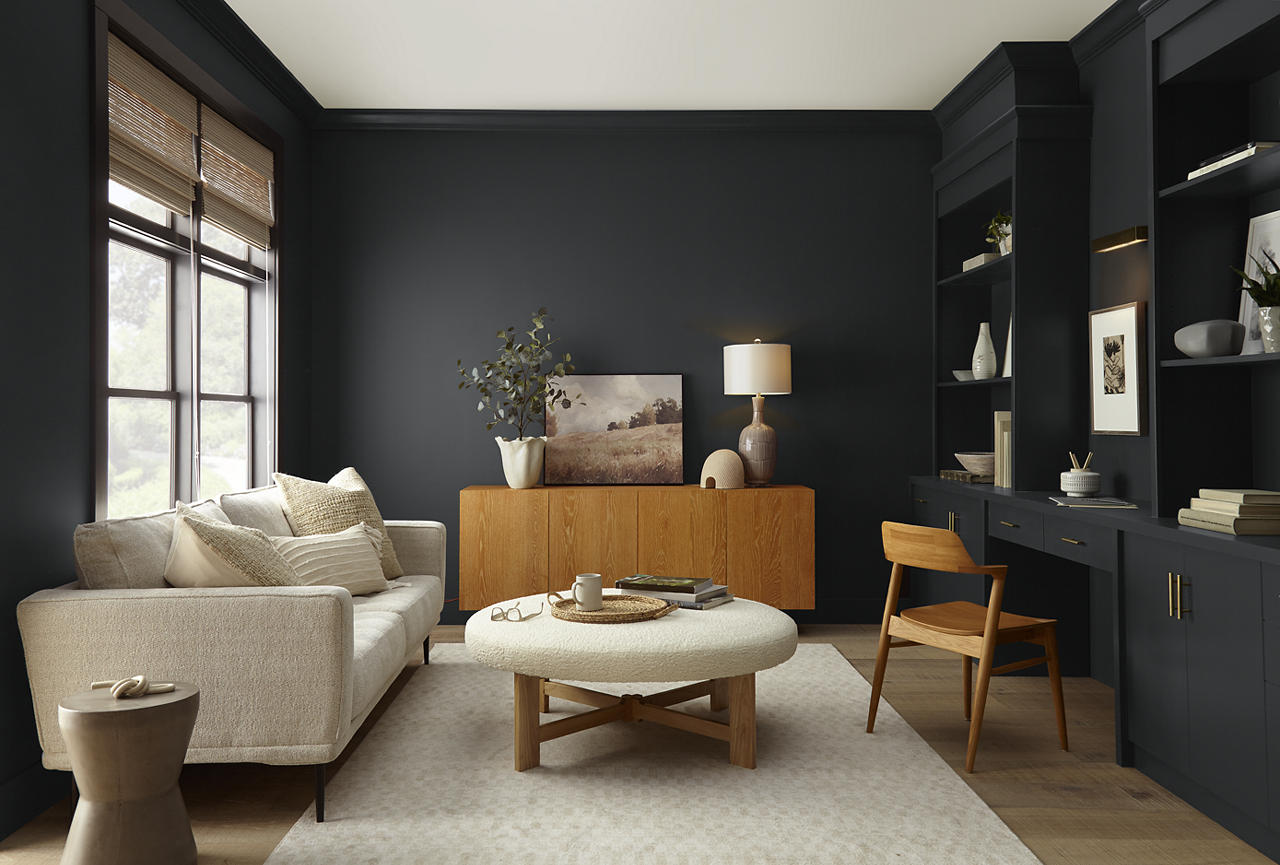
Black and near-black paint colours can create an even more enveloping look. Used on walls, cabinetry, built-ins or trim, deep shades add definition and sophistication while allowing lighter furnishings, natural wood and artwork to create contrast.
Should You Paint an Accent Wall or the Entire Living Room?
Both approaches can work—it depends on the effect you want to create.
Painting all four walls can make colour feel more intentional and immersive, particularly with earthy neutrals, greens, blues, burgundies and other nuanced shades. Extending colour onto trim, built-ins or even the ceiling can create an even more enveloping, tonal effect.
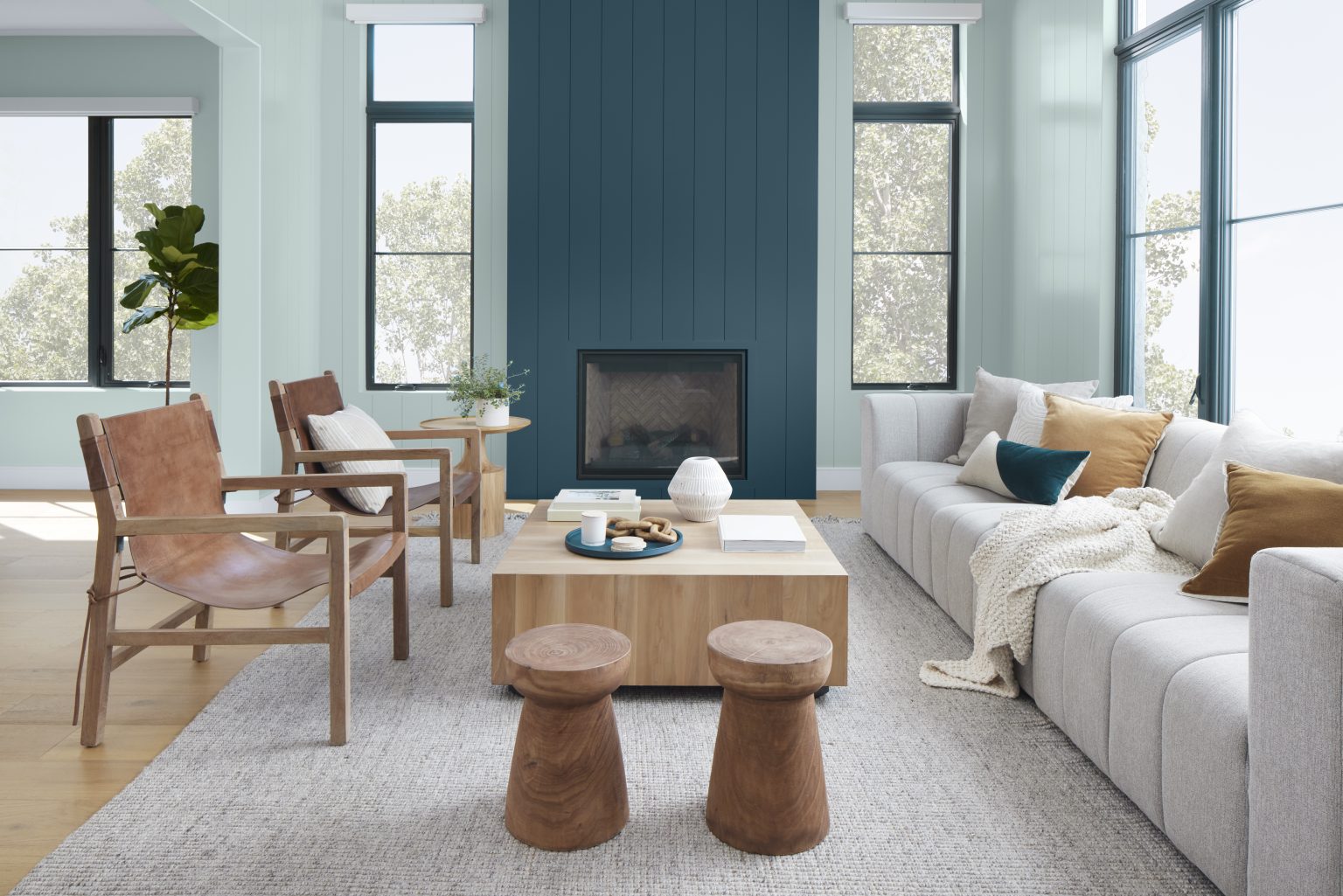
An accent wall can be useful when you want to highlight a fireplace, built-in shelving, architectural detail or focal point without changing the entire room.
In open living spaces, paint colour can also be used strategically to define one zone from another while maintaining a cohesive palette throughout the home.
Find a Living Room Colour That Feels Like Home
The best living room paint colour is ultimately one that supports the way you want to experience the space. Whether that means the quiet versatility of a warm neutral, the restorative quality of green or blue, the warmth of an earth tone or the personality of a deeper, more expressive hue, colour can transform how a living room looks and feels.
Start with the elements already in your room, consider the natural light and decide on the mood you want to create. Then explore different colour families and sample your favourites in a space.
A living room serves many purposes. The right colour can help make all of them feel connected.
Find the colour that brings your living room to life. Explore BEHR® paint colours, discover coordinating colour ideas and sample your favourites at home to see how each shade looks in your space and lighting.
Colourfully yours,
Diana
The best living room paint colour depends on the room’s natural light, furniture, fixed finishes and the atmosphere you want to create. Whites and light neutrals can feel open and airy, earthy neutrals can add warmth, blues and greens can feel calm and restorative, and deeper colours can create intimacy and drama.
Whites, creams, pale neutrals and softly tinted colours can help a living room feel more open and airy. Using lower contrast between the walls and trim can also create a more continuous visual effect.
Warm beige, brown, clay, muted yellow, earthy green, burgundy, plum and other deeper hues can bring warmth and intimacy to a living room. Layering these paint colours with natural wood, soft textiles and warm lighting can enhance the cozy effect.
A living room does not need to be lighter or darker than adjoining spaces. In open layouts, similar tones can create continuity, while a lighter or deeper living room colour can help visually define the space. The most important consideration is that the undertones and overall palette feel connected.
Sample paint colours directly in the living room and view them on multiple walls at different times of day. Natural light, artificial lighting, flooring, furniture and surrounding colours can all affect how a paint colour appears.


